Renting and Leasing in Spain: Finance Your Business's Machinery Acquisition


Renting and Leasing have become two of the most widely used financial tools for businesses looking to grow without tying up their working capital. Both arrangements give companies access to the latest machinery and equipment without needing to buy it outright, boosting productivity and preserving capital for other priorities.
This guide explains how Renting and Leasing work, their key advantages, the sectors where they are most commonly used, and how GrupInversor can help you find the right solution for your business.
Table of Contents
- What is Renting and what is Leasing
- Advantages of Renting and Leasing for businesses
- Renting vs Leasing: which is better for your business?
- The process for accessing Renting or Leasing financing
- Sectors where these solutions are most widely used
- Real example: an industrial company that financed its machinery with Leasing
- Complementary financing alternatives
- How GrupInversor helps your business
- Conclusion
- Frequently asked questions
The financial conditions detailed in this post are indicative only and will vary depending on the lender, the borrower's profile, the specific characteristics of the transaction and prevailing market conditions. Nothing here constitutes a binding offer or guarantee of financing.
What is Renting and what is Leasing
Renting and Leasing are financing arrangements that let businesses use capital equipment without purchasing it upfront. Both involve regular payments, but they serve different objectives:
- Renting: a form of long-term rental, typically including maintenance, insurance and support. It suits businesses that value flexibility and want to upgrade equipment regularly.
- Leasing: a financial lease with a purchase option, designed for companies that intend to own the equipment at the end of the contract.
Both solutions are particularly valuable for SMEs, manufacturing businesses and any company looking to modernise production without taking on a large bank loan.
Exploring Renting or Leasing options for machinery? Contact us for a free initial assessment from our business financing specialists.
Advantages of Renting and Leasing for businesses
Renting or Leasing brings clear strategic benefits, both financially and operationally:
- Liquidity preserved: invest in productive capacity without a large cash outflow.
- Tax efficiency: instalments are generally deductible as an operating expense or through accelerated depreciation.
- Access to current technology: use up-to-date equipment without the risk of it becoming obsolete.
- Simplified management: renting includes maintenance and insurance, reducing the administrative burden.
- Budget certainty: fixed, predictable instalments make cash flow planning straightforward.
- Contractual flexibility: options to expand, renew or switch equipment as your business needs evolve.
Renting vs Leasing: which is better for your business?
| Aspect | Renting | Leasing |
|---|---|---|
| Ownership of the asset | No | Possible at the end of the contract |
| Maintenance | Included | Not included |
| Typical duration | 1 to 5 years | 3 to 10 years |
| Tax treatment | Deductible operating expense | Accelerated depreciation |
| Flexibility | High | Medium |
| Purchase option | No | Yes |
Renting works best for businesses with short production cycles or equipment that needs frequent updating — the operational flexibility is hard to beat.
Leasing is the stronger choice when the goal is long-term ownership and the ability to depreciate the asset against tax.
A practical example: a construction firm might use renting for heavy plant on short-term contracts, while a manufacturer would typically prefer leasing for production-line equipment it plans to own long-term.
The process for accessing Renting or Leasing financing
Arranging a Renting or Leasing transaction is straightforward. Here are the main steps:
- Identify the asset or machinery the business needs.
- Assess financial viability — understand the budget and repayment capacity.
- Choose the right structure: renting, leasing or a hybrid solution.
- Submit documentation to the financial institution or leasing company.
- Sign the contract and take delivery: the business can start using the equipment immediately.
At GrupInversor, we guide businesses through every step of this process, from selecting the right lender to signing the contract. Want to find out if your business qualifies for Renting or Leasing?
Contact us and get a personalised assessment within 24 hours.
Sectors where these solutions are most widely used
Renting and Leasing are essential in capital-intensive sectors that depend on specialist equipment:
- Construction: excavators, cranes, concrete mixers.
- Industry and manufacturing: production lines, robots and CNC machinery.
- Transport and logistics: vans, lorries, industrial vehicles and forklift trucks.
- Agriculture: tractors, harvesters and smart irrigation systems.
- Hospitality and catering: commercial kitchen and refrigeration equipment.
- Technology: servers, printers, corporate hardware and software.
Discover all the sectors where we help businesses secure financing.
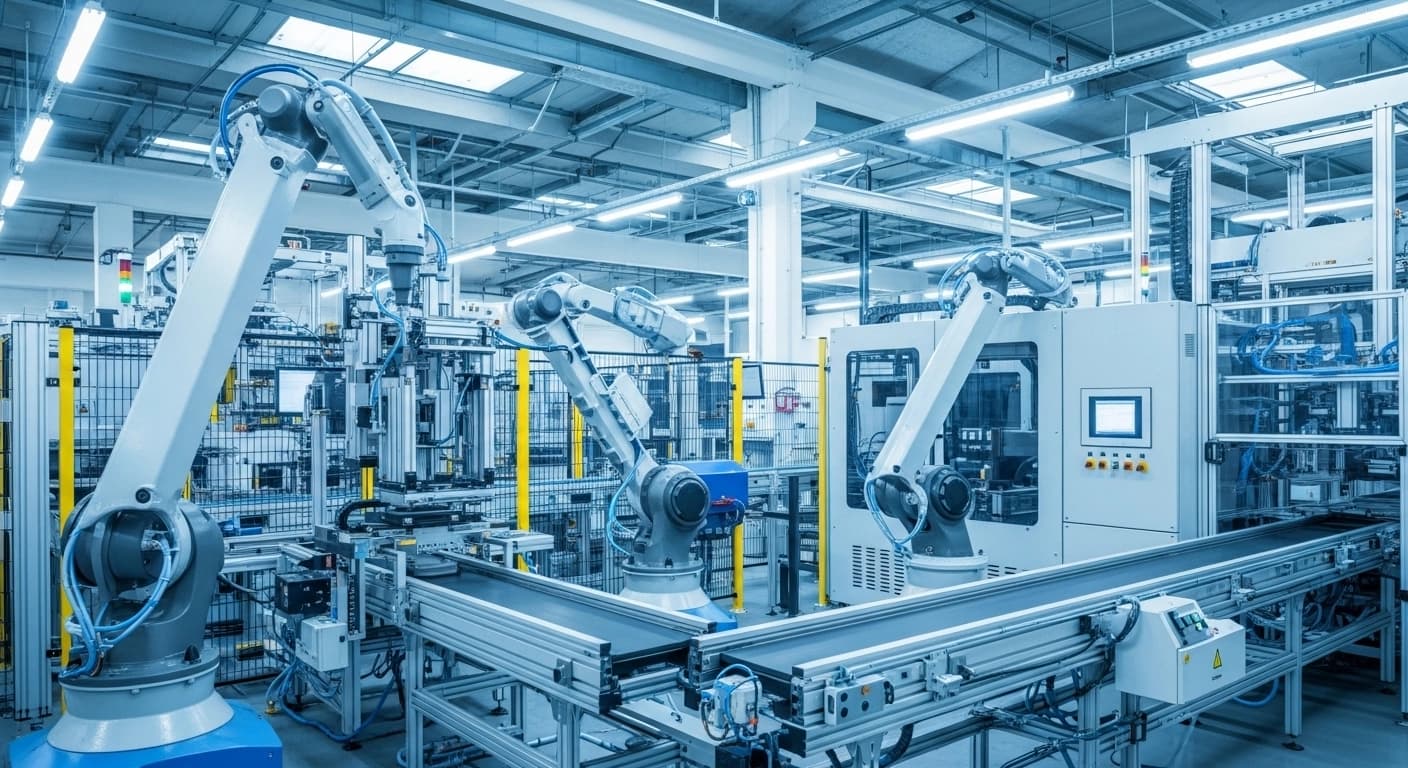
Real example: an industrial company that financed its machinery with Leasing
At GrupInversor we recently helped an industrial plastics manufacturer based in Barcelona finance the acquisition of a machine valued at €400,000 through a financial lease. The objective was to modernise their production line without affecting cash flow or adding to their bank debt.
The situation
The company needed to replace a critical piece of equipment to maintain throughput and improve energy efficiency. The banks they approached imposed restrictive conditions and demanded additional guarantees. Management wanted an alternative outside the banking system that would not erode their credit capacity or liquidity ratios.
The solution GrupInversor structured
After reviewing the company's financials and the characteristics of the asset, our team arranged a 60-month leasing transaction on the following terms:
- Amount financed: €400,000
- Term: 60 months
- Lease rate coefficient: 2.0154%
- Purchase option: one additional instalment at the end of the contract
- Time to completion: financing approved and signed in just 2 weeks
The transaction also delivered several advantages over a conventional bank loan:
- No impact on the credit register — the transaction does not consume bank risk capacity.
- Treated as an operating expense, not a balance sheet investment, improving key financial ratios.
- Option to acquire the asset at the end of the contract, with no prior debt obligation.
- Cash flow and liquidity ratios left intact, preserving financial flexibility.
- Digital signing at no cost, with no arrangement fees or notary expenses.
- No obligation to take out additional insurance.
- Full tax deduction: 100% of instalments deductible under Corporation Tax.
- Diversification of funding sources, adding a non-bank channel — particularly valuable in the current environment.
The outcome
Thanks to this leasing structure, the company had its new machinery operational within four weeks, with working capital untouched and productive capacity significantly improved. The new equipment reduced both manufacturing times and energy consumption, delivering a measurable operational return from the first quarter.
Want to know how to structure a Renting or Leasing deal outside the banking system? Contact us and find out how we can help you secure the best financing for your business.
Complementary financing alternatives
Alongside Renting and Leasing, there are other solutions that can be combined strategically to strengthen liquidity and expand your company's investment capacity:
-
Business credit lines: Flexible, revolving access to working capital for supplier payments, treasury needs or operational contingencies — without reapplying for a new loan each time.
-
Investment loans: Designed for expansion projects, productive asset acquisitions or infrastructure improvements, with repayment terms aligned to the expected return of the investment.
-
Short-term financing: Fast liquidity for operating costs, urgent purchases or temporary cash flow gaps, with faster approval than standard bank financing.
-
Factoring and confirming: Tools for optimising cash flow — factoring advances payment on outstanding invoices, while confirming streamlines supplier payments and strengthens commercial relationships.
Tip: combining Renting or Leasing with one or more of these options can produce a well-balanced financial structure — maintaining liquidity without sacrificing long-term investment capacity.
How GrupInversor helps your business
At GrupInversor, we assess each client's situation to design a tailored financing solution. Whether the answer is Renting, Leasing or another financial product, we find the structure that works best for your business.
Our process includes:
- Financial diagnosis and a clear assessment of your needs.
- Market comparison to secure the most competitive terms.
- End-to-end support through to contract signing.
Ready to finance machinery through Renting or Leasing? Contact us and we will help you compare the best options for your business.
Conclusion
Renting and Leasing are essential tools for Spanish businesses that want to grow, innovate and protect their liquidity. They provide access to modern equipment, support operational efficiency and offer tax advantages that a straightforward purchase cannot match.
With GrupInversor alongside you, you can compare offers, negotiate terms and find the financing solution that best supports your competitiveness.
Frequently asked questions
What is the main difference between renting and leasing?
Renting is a long-term rental without a purchase option, with maintenance and support included. Leasing is a financial lease that gives the company the option to acquire ownership of the asset at the end of the contract. With renting, the company simply uses the equipment; with leasing, it is progressing towards ownership. Renting also typically covers comprehensive services (maintenance, insurance, assistance), whereas with leasing these costs are usually the lessee's responsibility.
What tax advantages does machinery leasing offer?
Leasing can deliver meaningful tax savings through several mechanisms: it allows accelerated depreciation of the asset, deduction of the financing costs in line with applicable rules, and VAT on instalments is generally recoverable where applicable. In practice, these benefits can improve both tax efficiency and financial ratios when the structure is set up correctly — always subject to current legislation and with proper professional advice.
What type of machinery can be financed through renting or leasing?
Virtually any identifiable productive asset with a market value qualifies: industrial machinery (lathes, presses, production lines), agricultural equipment (tractors, harvesters), industrial vehicles (lorries, forklifts), technology (servers, computer equipment), medical devices (diagnostic equipment, instruments), construction plant (excavators, cranes) and commercial catering equipment (industrial kitchens, refrigeration units). The key requirements are that the asset is identifiable, insurable and retains residual value.
How long does a business renting or leasing contract last?
Renting contracts typically run for 1 to 5 years, particularly for assets prone to rapid technological obsolescence. Leasing terms generally fall between 3 and 10 years, depending on the asset's useful life. The optimal term balances useful life, tax strategy, repayment capacity and the risk of obsolescence.
What are the requirements for accessing renting or leasing for machinery?
Standard requirements include: a minimum trading history (typically 2 years), demonstrated solvency (annual accounts, up-to-date tax compliance certificates) and identification of the specific equipment (quote, technical datasheet). For larger amounts, additional security may be requested. Because the asset itself acts as the primary guarantee, approval is generally more straightforward than for an unsecured loan.
Is it possible to cancel a renting or leasing contract early?
Yes, though terms vary by contract and lender. Early termination of a renting agreement typically involves adjustments or penalties for committed services. Settling a leasing contract early usually requires repaying the outstanding capital plus any contractually agreed charges. Many contracts include flexibility provisions — it is worth reviewing and negotiating these before signing if you foresee the possibility of changes.
How does GrupInversor help with machinery renting and leasing?
At GrupInversor we add value across five areas:
- Diagnosis: we assess operational needs, tax strategy and financial position.
- Market access: we compare proposals from specialist institutions.
- Efficiency: we run simultaneous submissions to create competitive tension.
- Negotiation: we work on commercial and operational terms (services included, flexibility, renewals).
- Support: we manage the process through to signing and equipment commissioning.
What happens at the end of a leasing contract if I do not exercise the purchase option?
At expiry you have several options: return the equipment, renew on revised terms, extend temporarily or switch to a new contract on updated equipment. The best outcomes come from planning this decision well in advance — ideally 6–12 months before the contract expires — to maintain operational continuity and negotiate from a position of strength.
Does renting or leasing affect my ability to apply for other loans?
It depends on the arrangement and its accounting treatment. Renting is generally treated as an operating expense, with limited impact on recorded debt. Leasing may be recognised as both an asset and a liability on the balance sheet. In practice, because these transactions are backed by productive assets and support operational capacity, most lenders view them positively when they are properly explained.
Can I include additional services in a leasing contract?
Yes. While traditional leasing does not always include them, the market offers hybrid solutions that bundle in scheduled maintenance, specific insurance, training, software updates and technical support. A comprehensive package simplifies management — one instalment, one provider — though it is worth comparing it with a modular approach to evaluate the cost/benefit trade-off and the scope of coverage.
Have specific questions about Renting or Leasing for your situation? Contact us and an adviser will respond within 24 hours with a personalised assessment.